

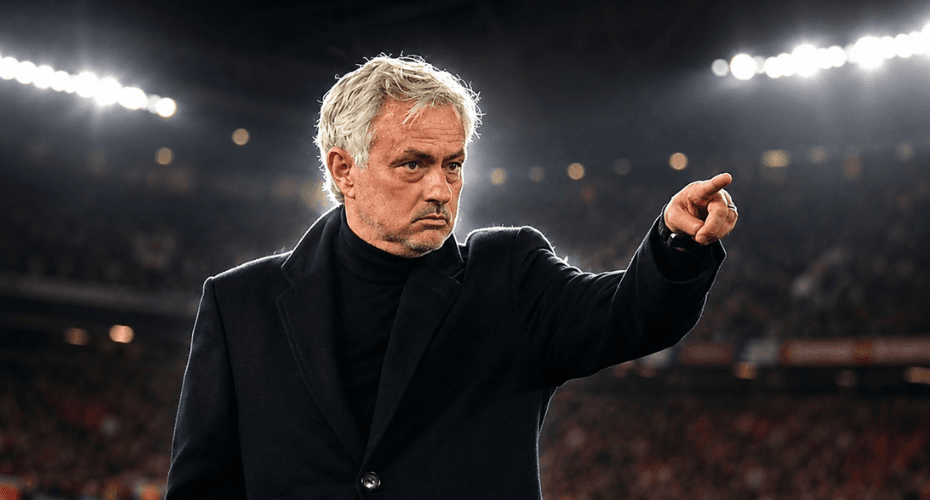
Jose Mourinho has spent much of the past decade being described as football’s ultimate box office manager. The trophies have slowed, the touchline confrontations have become more familiar, and some of the old aura has faded. Yet somehow, the fascination remains.
Now, just weeks into his second spell as Real Madrid manager, Mourinho is back at the centre of the football conversation for another reason. A new Netflix documentary has revealed that he actually agreed to replace Sir Alex Ferguson at Manchester United in 2013 before changing his mind and returning to Chelsea.
It is exactly the kind of revelation that keeps Mourinho relevant more than two decades after he first became one of football’s most recognisable characters.
For supporters interested in the personalities behind the biggest clubs, European football travel, historic stadiums and the stories that turn ordinary fixtures into must see occasions, Mourinho continues to occupy a unique place in the game. Wherever he goes, something tends to follow.
Is Mourinho really still box office?
The phrase has followed him for years.
Whenever Mourinho says something provocative, starts an argument, produces an unforgettable press conference or simply behaves in a way that feels unmistakably Jose, the same description appears again.
Box office.
Sometimes it probably gives fairly ordinary behaviour more significance than it deserves. If another manager did the same thing, it might barely register. Mourinho carries enough history that even a small moment can quickly become part of the wider mythology.
Still, it is difficult to argue that people have stopped caring.
Mourinho has not won a league title for 11 years. He has not lifted any trophy for four. Yet interest in him continues everywhere from social media and journalism to documentary filmmaking and the offices of Real Madrid president Florentino Perez.
His return to Madrid this summer, 13 years after his first spell ended, already offered a fairly convincing answer to whether he remains one of football’s biggest personalities.
Now Netflix is putting that idea under an even brighter spotlight.
Netflix takes on the Mourinho story
The new three part documentary, simply titled Mourinho, has been produced by John Battsek, whose previous work includes Oscar winning documentaries One Day In September and Searching For Sugar Man, as well as the recent Netflix film about David Beckham.
Joe Pearlman directs the series. His previous work has largely focused on music, including films about Bros and Lewis Capaldi.
The documentary saves its biggest revelation for the third instalment.
While discussing the end of Mourinho’s first three year spell at Real Madrid, he pauses before offering the sort of knowing look that has accompanied many of his most memorable moments in front of a camera.
“I go to Chelsea in 2013, but in that period there is something nobody knows. I think I can say, without hurting anyone with the truth. I think the objective of this work we are doing is to tell the truth.”
Then comes the bombshell.
Mourinho says he accepted the Manchester United job in 2013
Mourinho reveals that he had agreed to become Manchester United manager in the summer of 2013 following Ferguson’s retirement.
That means he had accepted the role before United eventually appointed Everton manager David Moyes.
Mourinho says he then changed his mind.
Instead of heading to Old Trafford, he returned to Chelsea for a second spell because, “after Real Madrid, I needed to feel love”.
Initially, it sounds almost too perfectly Mourinho. Emotional, dramatic and conveniently timed for a major documentary.
Then Sir Alex Ferguson appears.
Ferguson confirms that Mourinho was offered the Manchester United job and had accepted it before reversing his decision. According to Ferguson, Mourinho later phoned him in tears to explain that he had changed his mind.
That will inevitably become the headline story from the documentary.
It is genuinely new information, and it changes the established understanding of Mourinho’s relationship with Manchester United before he eventually became their manager in 2016.
Yet the series becomes much more interesting when it moves beyond headline revelations.
A documentary that began as Mourinho trying to set the record straight
Mourinho first began discussing the possibility of participating in a documentary in 2022 while managing Roma.
Pearlman believes that, at the time, Mourinho saw it partly as an opportunity to remind the football world who he was.
“I think he was ready to try to set the record straight,” says Pearlman, “and to say to everyone, ‘I’m Jose Mourinho, remember what I did, and this is what I’m going to do’. That’s the person I thought I met. That changed over the years, but when I met the man, it felt like it was a score to settle.”
There is certainly some score settling in the finished series.
Mourinho still appears bitter about being dismissed by Chelsea on two separate occasions. There are remarks aimed at people who dismissed him earlier in his career while he worked on the coaching staff at Barcelona.
And there is a barely disguised shot at one of his most famous rivals, Pep Guardiola.
“Don’t talk to me about sabbaticals,” Mourinho says. “To me, sabbatical means weakness.”
Some rivalries, apparently, never really disappear.
The familiar Mourinho stories are still there
The documentary naturally revisits the moments most football fans will already associate with Mourinho.
Former players and colleagues appear throughout, including John Terry, Frank Lampard, Iker Casillas and many of Mourinho’s former assistants.
There is footage from the trophy filled years that made his reputation.
There are stories from his first spell at Chelsea too, including an unusual episode in which Mourinho was asked to travel to Sardinia to coach a team made up of staff from Roman Abramovich’s yacht.
For anyone who remembers the peak Mourinho years, there is plenty of nostalgia.
Those moments also offer a reminder of why Mourinho became such an extraordinary figure in the first place. Porto, Chelsea, Inter and Real Madrid turned him into a manager who could transform the atmosphere surrounding a club almost instantly.
For supporters travelling across Europe for football weekends abroad, those teams and stadiums became part of an era in which Mourinho regularly provided the biggest stories in the Champions League and domestic football.
But the most revealing part of Mourinho is not really about the trophies.
It is about vulnerability.
The documentary reveals a more vulnerable Mourinho
Mourinho crying while speaking to Ferguson about rejecting Manchester United is one example, although football has seen him emotional before.
After Inter completed their treble in 2010, Mourinho famously became emotional before leaving the celebrations early. He later explained that if he had stayed with his players, he might not have been able to leave for Real Madrid that summer.
The more revealing moments in the documentary arrive when Mourinho talks about his family.
At one stage, he admits that he thinks his children “enjoy life much more without me”.
It is a startling admission from someone whose public persona has usually been built around certainty, control and confrontation.
The same vulnerability emerges when he talks about his early career.
Mourinho grew up close to professional football because his father, Felix, was a player. Yet his own journey into the game often placed him around its edges. During his time working at Barcelona, he was frequently dismissed as little more than a translator rather than treated as a serious coach.
That slight appears to have stayed with him.
Even after winning almost everything there is to win and now being appointed Real Madrid manager for a second time, Mourinho still seems to carry the feeling that football has never entirely accepted him.
It helps explain the personality he eventually built around himself.
The influence of Mourinho’s father
The emotional centre of the documentary is arguably Mourinho’s relationship with Felix.
“He is the opposite of me, because everybody loved him,” Mourinho says.
It is a simple line, but it reveals plenty.
Mourinho has always understood that people do not necessarily like him. In fact, at various points he has appeared to use that hostility deliberately.
“I’m not nice, that’s just the way it is. I do it with pride. Anything to get your players not to lose”
Later, he adds: “I don’t want to change,” he says later. “It’s too late.”
Those comments suggest that the character Mourinho became was not simply something that happened to him.
To some extent, he chose it.
If his father was widely loved, Mourinho became comfortable being the opposite. Conflict could be useful. Opposition could create loyalty inside the dressing room. Being disliked could become another managerial tool.
The price of that approach becomes clearer when the conversation returns to his father.
Mourinho does not want to talk about his real self
One of the most revealing exchanges comes when Pearlman pushes Mourinho to speak more deeply about Felix.
Mourinho replies: “You are pushing me to speak about myself, which I don’t want to.”
On the surface, it sounds almost absurd.
Jose Mourinho does not want to talk about himself?
Few managers have spent more time talking publicly about their achievements, their methods, their rivals and their view of football.
But that is not really what he means.
Mourinho seems comfortable discussing Jose Mourinho the football character. The provocateur. The winner. The manager who walks into press conferences knowing exactly which headline he wants to create.
Talking about the actual person underneath that character is different.
The documentary suggests that the persona Mourinho created around 25 years ago has gradually become tangled with the person himself. Yet the two are still not entirely the same.
When the conversation reaches his father, maintaining that separation becomes harder.
How close did Netflix get to the real Mourinho?
Pearlman believes the filmmakers got unusually close.
“I think we got as close as anyone’s ever got,” he says.
Those conversations were recorded across several stages of Mourinho’s recent career, beginning shortly after he left Roma in January 2024, continuing through his 13 months at Fenerbahce and eventually reaching his recent second spell at Benfica.
That span matters.
Instead of capturing Mourinho during a single moment of success or failure, the documentary follows him across changing circumstances and different versions of himself.
Even then, Mourinho remains guarded.
“People think they know me, but they don’t know me,” Mourinho says at one point. “I don’t care.”
There is an obvious contradiction in saying that while participating in a multipart documentary about yourself.
That contradiction is also very Mourinho.
Could the documentary have gone even deeper?
If there is one major issue with the series, it is its structure.
At three episodes, it somehow feels both too long and not long enough.
The first episode broadly covers Mourinho’s original Chelsea spell while also exploring some of his origins.
Episode two focuses on Inter, arguably the pinnacle of his career and the team he guided to the treble in 2010.
The third episode covers his first period at Real Madrid and virtually everything that followed, while also containing much of the most personal material about Mourinho and his family.
That leaves the series caught between two different types of documentary.
One option would have been a much shorter and more intimate character study. That version could have largely ignored the familiar football timeline and concentrated almost completely on Mourinho as a person.
The alternative would have been something far bigger.
Six, seven or eight episodes could have given far more space to every stage of his extraordinary career, allowing the documentary to explore the football as deeply as the personality.
Instead, Mourinho tries to do both.
It still works. It is entertaining, it finds genuinely unexpected material and it reveals sides of Mourinho that supporters rarely see.
Yet there is a lingering feeling that another version of this story might have gone even further.
Mourinho’s Real Madrid return gives the documentary a perfect ending
The timing could hardly have been better.
While the documentary was receiving its finishing touches, Real Madrid came calling again.
Mourinho returned to the Bernabeu this summer, bringing the story full circle 13 years after leaving the Spanish giants.
For a documentary about whether football has moved past Mourinho, there could hardly be a more fitting final chapter.
“You see a version of the descent of the man,” says Pearlman, “and then he does what Jose Mourinho does — he arrives back at the place he says he deserves to be.”
That return changes the documentary too.
Without Madrid, Mourinho might have felt like a retrospective on one of football’s great managerial careers.
With Madrid, it becomes something else.
The story is still happening.
And for anyone considering a football trip to Madrid, a visit to the Bernabeu now comes with an additional layer of theatre. Mourinho back on the touchline at one of Europe’s great stadiums is exactly the sort of narrative that turns a fixture into a wider football travel experience.
So, is Jose Mourinho still box office?
The answer increasingly looks like yes.
Maybe not in exactly the same way as 2004, when Mourinho arrived at Chelsea announcing himself as the Special One. Maybe not like 2010, when he conquered Europe with Inter. And perhaps not like his first Real Madrid spell, when almost every Clasico felt like the centre of the football universe.
But people still watch.
Netflix believes there is enough interest for an entire series. Florentino Perez believes enough in Mourinho to hand him Real Madrid again. Sir Alex Ferguson is appearing in a documentary to explain a Manchester United story that remained secret for more than a decade.
And Mourinho is still capable of producing a revelation that immediately changes how one of modern football’s biggest managerial appointments is understood.
That sounds pretty box office.
Perhaps the difference now is that the most compelling version of Mourinho is no longer simply the confrontational manager standing beside the pitch. It is the person underneath, the one who admits his children may enjoy life more without him, who still carries the scars of being dismissed as a translator, and who struggles when conversation moves too close to his father.
For all the trophies, controversies, football trips, unforgettable Champions League nights and stadiums he has shaped, Mourinho’s greatest act may have been constructing Jose Mourinho.
Netflix gets closer than most to showing what exists underneath it.