
Ferran Torres has had the kind of summer that sounds almost too dramatic even by modern football standards.
On July 19, he came off the bench in a World Cup final, scored the winning goal in the 106th minute and instantly became a national hero. Spain beat Argentina 1 0, Torres delivered the second World Cup in the country’s history, and the celebrations that followed were built around him.
A month later, he was leaving Barcelona for Paris Saint Germain in a €50million transfer, with some Barcelona supporters actually welcoming his departure.
That is a remarkable turnaround for a player who had just scored the most important goal of his career.
Torres is not leaving Barcelona as a universally disliked figure. He is not departing after falling out with everyone at the club. But something changed during the weeks after the World Cup final. His celebrations, his public comments and his media appearances in the United States created a growing sense of frustration among sections of the fanbase.
And many believe the World Cup winning goal was the moment everything accelerated.
From World Cup hero to a controversial summer
Spain’s celebrations after the final were enormous.
When the squad returned home, Madrid hosted a trophy parade in which inflatable sharks appeared among the crowds. The reference was obvious. Torres had long embraced the nickname El Tiburon, meaning shark, during his time at Barcelona.
The nickname had originally helped him deal with pressure and criticism. Now it had become part of his image as one of Spain’s biggest World Cup heroes.
Then came the hat.
During the celebrations, Torres wore a red baseball cap carrying the words “Make Spain Great Again”.
The similarity with United States President Donald Trump’s “Make America Great Again” slogan was impossible to miss.
The White House itself noticed.
Its official X account posted footage of Torres wearing the cap alongside the message: “Everyone wants in on the movement.”
Torres later insisted there had been no political meaning behind the gesture. According to him, it was simply a reference to Spain returning to the top of world football.
That explanation did little to stop the discussion.
The bracelet that added another layer
The cap was not the only detail that attracted attention.
Torres was also seen during the celebrations wearing a rubber bracelet carrying the Spanish flag and branding from the Guardia Civil, one of Spain’s two national law enforcement organisations alongside the Policia Nacional.
There is no evidence that Torres intended the bracelet as a political statement.
But in Catalonia, symbolism around Spanish national identity is rarely interpreted without context.
That context still includes the events of 2017, when Catalonia’s independence movement reached its modern peak.
Regional authorities organised a referendum on independence without permission from the Spanish government, which declared it illegal. Huge crowds filled the streets of Barcelona and the vote was accompanied by a heavy police crackdown.
The political intensity surrounding that period has since weakened considerably, but the memory remains.
So even if Torres saw the bracelet simply as an expression of Spanish identity, others viewed it through a very different lens.
For a club such as Barcelona, where football and Catalan identity have been intertwined for generations, those details inevitably carried additional meaning.
A mural of Torres became another flashpoint
The reaction soon became visible on the streets of Barcelona.
A mural of Torres painted by Italian street artist TVBoy was vandalised.
Someone wrote: “We want Catalan national teams”.
Another message simply read: “Spain”.
Both were written in Catalan.
Torres addressed the controversy several weeks later in an interview with Radio Play Valencia.
“I am Valencian, a Valencianista (a proud supporter of the Valencia region) and Spanish,” he said. “If someone doesn’t like that, that’s their problem.”
Those comments came on August 7.
By then, though, another controversy had already begun.
The United States interviews that caught Barcelona by surprise
After the World Cup, Torres and the other seven Barcelona players involved with Spain were given time off before returning for preseason training.
Torres travelled to the United States.
On August 3, he embarked on a run of media appearances that caught Barcelona by surprise.
Asked by NBC where he expected to be playing during the coming season, Torres offered an answer that immediately raised questions about his future.
“I have a contract at Barcelona, but in football you never know,” he said on NBC when asked where he would be playing this season, his Barca contract due to expire in June 2027. “I am just waiting to make the right decision, but I don’t know it yet.”
Later, speaking to Sportico, he was asked about reported interest from Paris Saint Germain.
“Every time these teams want you it’s a good thing,” Torres said. “In football you never know what can happen, but the good thing is that, as I have a contract, I can wait and decide on my own.
“What do Barca need to do to keep me? They have to show me they want me, come to negotiate, and in the end it’s all about talking.”
Those comments did not land particularly well among sections of the Barcelona support.
Some supporters felt the club and fanbase had stood by Torres during difficult periods and that his sudden public positioning after becoming a World Cup hero felt unnecessary.
Perhaps even opportunistic.
Torres never completely fulfilled expectations at Barcelona
The wider context matters.
Torres joined Barcelona from Manchester City in January 2022 for €55million.
He never fully became the player many expected.
There were good periods, important goals and moments when his technical ability fitted naturally into Barcelona’s attacking football. But consistency remained elusive.
Torres has spoken openly about struggling with the psychological side of the game and consulted psychologists in an attempt to improve his performances and confidence.
That process eventually led to the shark nickname.
The inspiration came from UFC fighter Ilia Topuria.
Torres heard an interview in which the Georgian Spanish fighter spoke about his opponents.
“There’s only one shark here; the rest are sardines.”
Torres found the line amusing and repeated it to his Barcelona teammates during a meal.
Then, after his goalscoring form improved at the beginning of the 2023 to 2024 season, teammates started calling him El Tiburon.
The nickname stuck.
His celebrations began reflecting the identity too. They felt like the gestures of someone responding directly to critics, proving that he could still succeed at Barcelona.
That feeling never completely disappeared.
Every goal started to feel like an answer
Torres frequently played as though criticism followed him everywhere.
At times that edge seemed useful.
It helped create determination and gave him something to push against.
But it also meant that the relationship between Torres and the criticism surrounding him became central to his time at Barcelona.
Every goal felt like an answer.
Every strong performance felt like evidence.
Every setback seemed to reopen the same debate about whether he was good enough.
Barcelona is hardly an easy environment for any footballer. The club operates under enormous pressure, with every performance dissected and every decision debated.
For fans travelling to Barcelona for football weekends abroad or a major football stadium experience, that intensity is part of the attraction. The atmosphere around the club extends far beyond the 90 minutes.
Torres experienced that pressure from the inside.
Hansi Flick planned a bigger role for Torres
At the beginning of the 2025 to 2026 season, Hansi Flick appeared ready to give Torres a greater role.
The plan was for the campaign to represent a gradual transition from Robert Lewandowski towards Torres as Barcelona’s leading centre forward.
It did not unfold that way.
Torres finished the season with 21 goals and three assists from 49 appearances, respectable numbers but not enough to establish himself as the undisputed first choice striker.
More damaging was the barren spell.
Between late January and the middle of April, Torres went 14 matches without scoring.
That run changed the picture.
By the end of the season, Barcelona increasingly viewed him as an elite substitute rather than a guaranteed starter.
The contract situation became complicated
There were also financial complications surrounding Torres’ future.
His Barcelona contract was due to expire in June 2027.
After the season finished, there was no significant progress on a renewal.
Part of the difficulty came from the agreement that originally brought him from Manchester City.
Had Barcelona renewed Torres’ contract, they would have owed City around €8million.
Another clause created a different complication.
If Barcelona had sold Torres for more than €55million, the club would have owed Manchester City €10million.
Those conditions made an already awkward decision even more complicated.
Barcelona did not see Torres as untouchable.
They also did not necessarily want to lose control of the situation.
Barcelona’s pursuit of Julian Alvarez sent another message
While Torres’ future remained unresolved, Barcelona spent the summer attempting to sign Atletico Madrid striker Julian Alvarez.
That pursuit only strengthened the impression that Torres was not viewed as the long term first choice centre forward.
For Torres, it reinforced feelings that had already been building.
He believed he had been judged harshly for some time.
The criticism had become part of how he understood his relationship with Barcelona.
Every strong performance became another rebuttal.
Every goal became a response.
Then came the World Cup.
And suddenly Torres had the biggest response imaginable.
One goal changed his status overnight
The winning goal against Argentina changed everything.
Torres entered the World Cup final from the bench and scored in the 106th minute.
Spain won 1 0.
The comparison with Andres Iniesta’s winner against the Netherlands in the 2010 World Cup final was immediate and unavoidable.
Iniesta had also scored in extra time.
Spain had also won that final 1 0.
For Torres, a player who had spent years answering questions about whether he belonged at the highest level, the symbolism was extraordinary.
He had not simply scored another goal.
He had scored the goal that made Spain world champions.
From his perspective, it is not difficult to understand why that might have changed how he viewed his own standing.
The player who had spent so long feeling doubted suddenly possessed an argument nobody could dismiss.
World Cup winner.
World Cup final match winner.
National hero.
Did the World Cup goal change how Torres saw Barcelona?
This is where the relationship between Torres and Barcelona becomes more complicated.
His critics were real.
So was the pressure.
He had unquestionably been scrutinised heavily during his time at the club.
But there is another side to the story.
Many Barcelona supporters felt they had backed Torres through difficult periods. They saw a player whose confidence had clearly suffered and were willing to celebrate his recoveries and important goals.
That is why some interpreted his United States interviews as a kind of betrayal.
They heard a player who had just experienced the greatest moment of his career suddenly talking publicly about his future and what Barcelona needed to do to prove they wanted him.
From that perspective, the timing mattered.
Did Torres receive more criticism than he deserved?
Possibly.
Did he also receive more support than he remembers?
Probably.
The reality, as often happens in football, is likely somewhere between the two.
PSG offers Torres a new beginning
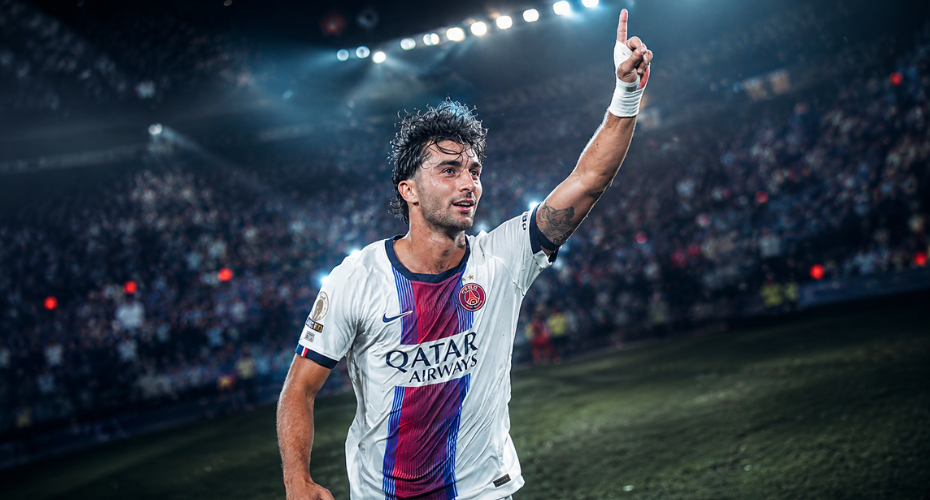
The eventual outcome was a €50million transfer to Paris Saint Germain.
Torres now reunites with Luis Enrique, his former Spain manager.
For PSG, the deal brings in a player whose confidence could hardly be higher after deciding a World Cup final.
For Barcelona, it resolves a difficult contract situation and removes a player who had increasingly been viewed as a high quality squad option rather than an automatic starter.
For Torres, it represents something more personal.
A fresh start.
He leaves Barcelona after four and a half years in which his relationship with the club never quite settled into one clear identity.
At different moments he was a major signing, a struggling forward, a psychological comeback story, El Tiburon, a useful substitute, a potential Lewandowski successor and eventually a World Cup hero.
Now he becomes a PSG player.
A very Spanish ending to a strange Barcelona story
Perhaps the most interesting part of Torres’ summer is how dramatically the perception around him changed.
One month earlier, supporters were carrying inflatable sharks through Madrid as Spain celebrated becoming world champions.
Then came the cap.
The bracelet.
The mural.
The interviews.
The questions about his Barcelona future.
And finally, the transfer.
Maybe scoring the winning goal in a World Cup final convinced Torres that years of criticism had been answered permanently.
Perhaps he looked back at everything he had endured at Barcelona and decided this was finally the moment to take control.
There is something understandable about that.
But there is also something strangely fitting about the possibility that Torres spent years fighting critics who, in his mind, had become bigger and more permanent than they really were.
It brings to mind one of Spain’s most famous literary figures.
Don Quixote spent his story battling giants that were not always quite what they seemed.
For Torres, the battles were real.
The pressure was real.
The criticism was real.
But perhaps, sometimes, the giants became larger in his imagination.
Whatever the truth, his Barcelona story has ended in a way almost nobody would have predicted when he was scoring Spain’s World Cup winning goal.
And for football fans following the biggest European football travel stories, it adds another layer to the new season. Torres leaves one of the continent’s great football cities for another, taking the confidence of a World Cup hero and the baggage of a complicated Barcelona chapter with him.