
Spain’s final home match before this summer’s World Cup was supposed to be a straightforward send off. Instead, the friendly against Egypt in Barcelona became a deeply troubling night that has sparked police involvement, political reaction, and wider concern about the image of Spanish football at a crucial moment.
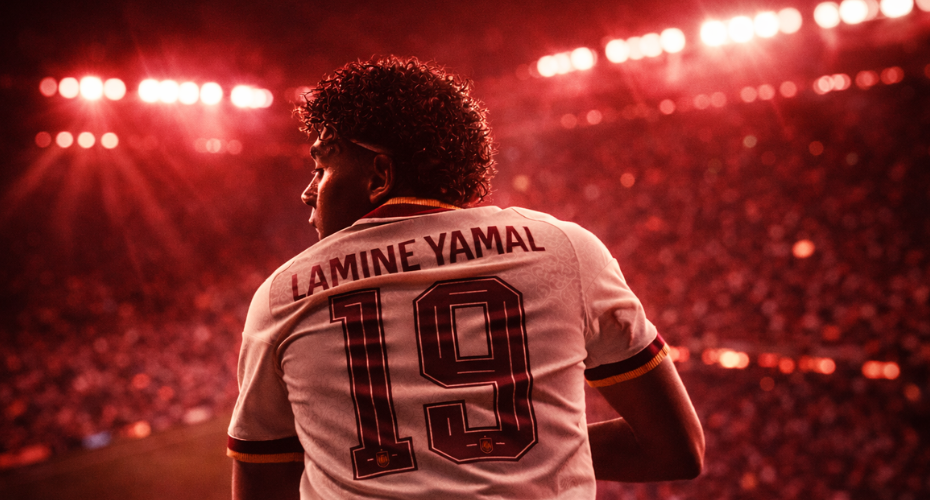
The most powerful response came not from an institution, but from Lamine Yamal. Spain’s brightest star, still only 18, described the chanting he heard inside RCDE Stadium as “ignorant and racist”, and his words quickly became the centre of a story that now stretches far beyond one match. With Spain preparing to co host the 2030 World Cup alongside Morocco and Portugal, and with RCDE Stadium itself due to stage games at that tournament, the fallout could carry real significance for Spanish football, stadium culture, and the country’s standing on the international stage.
What happened at RCDE Stadium?
Ten minutes into Tuesday’s friendly between Spain and Egypt, a large section of supporters inside Espanyol’s RCDE Stadium joined in with chants of “musulman el que no bote es” which translates as “whoever does not jump is a Muslim”.
The chant was repeated during the first half. At the interval, the Spanish football federation, the RFEF, used both the public address system and the big screens inside the stadium to call on fans to stop any discriminatory chanting.
Even so, the chant returned in the second half. This time, most of the stadium reacted with whistles and boos, and it did not spread from one section of the ground in the same way.
The incident was especially striking given the presence of Yamal on the pitch. The Barcelona winger, whose parents are from Morocco and Equatorial Guinea, is a practising Muslim and had also been the most warmly received player in the stadium. He was on the field when the loudest chanting took place and was later substituted at half time for Osasuna’s Victor Munoz.
The RFEF’s security department contacted Espanyol’s head of security after the chants were heard, asking for action to be taken to end them, according to federation sources. Stadium security then approached individuals believed to be leading the chanting on two separate occasions. Those figures were already known to security from previous matches.
No one was removed from the stadium. Federation sources said that identifying individual perpetrators in the middle of a large crowd was difficult, even though action had been attempted. The RFEF also insists that the established protocol was followed, pointing to the announcements inside the ground, the warning messages on the screens, and social media posts condemning the incidents.
The match itself was never stopped.
How Spain’s players and Yamal responded
The first player reactions came after the game in the mixed zone.
Pedri made clear that the dressing room had been shaken by what happened. “We, as players, were shocked by the chants too,” said Barcelona midfielder Pedri. “We don’t agree to any sort of racist chant. We did not expect it. We all have to work together to stop this from happening in stadiums.”
Asked about Yamal specifically, Pedri said he had not yet spoken to him after the game.
Spain goalkeeper Joan Garcia, who himself was insulted because of his Espanyol background, also condemned what had happened. “Any discriminatory message against anything… We are absolutely against it. I have heard the chants and the message from the FA on the speakers.”
Then came Yamal’s own response, posted the following day on social media. It was calm, direct, and impossible to ignore.
“Yesterday in the stadium, we heard the chant ‘whoever does not jump is a Muslim’. I know it was directed to the opposing team and nothing towards myself as a person, but as a Muslim myself, this does not stop it from being a lack of respect and something we can’t tolerate.
“I understand not all the fanbase is like that, but to those who sing those chants: using religion as something to mock people in a football stadium leaves you as ignorant and racist people. Football is to enjoy and support, not to offend people by who they are or what they believe in.”
For a player who already represents both the future of Spain and one of the defining attractions of any major football trip or live football travel experience, the significance of that statement was hard to miss.
How the authorities reacted
The official response in Spain was immediate.
Prime Minister Pedro Sanchez, who had also been insulted by some Spain supporters during the match, condemned the anti Muslim chanting in strong terms. He called it “unacceptable and something that must not happen again”.
“We cannot allow an uncivilised minority to tarnish the reality of Spain — a tolerant country of many,” he said. “The national team and its supporters are as well. My full support goes to the athletes who suffered this, and my applause.”
The Council on American Islamic Relations, the largest Muslim civil rights and advocacy organisation in the United States, also issued a statement condemning the incident. “Bigotry has no place in sports or in society at large. Athletic competition should bring people together across cultures, faiths and backgrounds — not spread intolerance.
“These disturbing incidents reflect a broader rise in anti-Muslim bigotry worldwide.”
RFEF president Rafael Louzan spoke shortly after the game. He condemned the chanting but described it as “an isolated case”.
“This must not happen again,” Louzan said. “Spanish society is, for the most part, exemplary — this is an isolated case. We came here at short notice after the ‘Finalissima’ (against Copa America champions and 2022 World Cup winners Argentina) was not held in Qatar, and I have thanked the president of the Egyptian federation for being here and offered my apologies.”
According to an RFEF source, Louzan also apologised directly to Egypt’s ambassador to Spain, Ehab Ahmed Badawy, who attended the match.
A formal investigation has now been launched by the Mossos d’Esquadra, Barcelona’s regional police force, working alongside the city’s public prosecutor’s office. The RFEF says its head of security is cooperating fully. Once investigators complete their work, a judge will decide whether there is enough evidence for the incident to be treated as a hate crime under Spanish criminal law.
The wider political and cultural backdrop in Spain
This story does not sit in a vacuum. It lands in a country whose relationship with Muslim history is both deep and complex.
Large parts of the Iberian Peninsula were under Muslim rule from the early eighth century until the late 15th century. At its height, Al Andalus covered much of what is now Spain, including areas around both Barcelona and Madrid. That period left a profound cultural mark. It shaped everyday language, influenced cuisine, and helped produce some of Spain’s most famous historic landmarks, including the Mosque Cathedral in Cordoba, the Alhambra in Granada, and the Alcazar in Sevilla.
Yet modern politics has complicated that legacy. Spain’s far right party Vox has repeatedly tied its anti immigration and anti Islam messaging to the idea of a historical “reconquest”, invoking the Christian seizure of Granada in 1492 as a symbolic endpoint.
That makes football an especially charged space. Yamal has already faced racist abuse linked to his Muslim background before. During a Clasico at the Bernabeu in October 2024, he was targeted by abuse that eventually led to a minor receiving a one year stadium ban and being sentenced to 30 hours of community service.
Spanish football has seen repeated racist incidents in recent years. Vinicius Junior has endured several across the country. More recently, La Liga has been investigating claims made by Espanyol defender Omar El Hilali, who alleged that Elche striker Rafa Mir told him he had “arrived on a raft” during a match in early March. Mir denies the allegation.
Most of Spain’s major political parties condemned what happened on Tuesday night, including the socialist led government, the conservative Partido Popular, and the left wing Podemos.
Vox took a different route. Its secretary general Ignacio Garriga responded by pointing instead to other issues he regarded as more important, including claims about sexual assaults, “jihadists”, and Spaniards feeling “like foreigners in their own neighbourhoods”.
Former Tottenham winger Nayim, who was born in Ceuta and now works as youth football co ordinator for the city’s second division club, was among those who felt Louzan’s description of the chants as an isolated case did not go far enough.
“I’d have liked something stronger from the RFEF,” he said. “You have to come down heavier on these things; there were millions of people watching, and it was very sad. There’s also a Muslim player, one of the best. This must change, coming from the very top.”
What could this mean for the 2030 World Cup?
Inevitably, attention has turned to the 2030 World Cup, which Spain will co host with Morocco and Portugal.
There was immediate speculation over whether the episode might affect the contest to stage the final, with Real Madrid’s Bernabeu and the Grand Stade Hassan II in Casablanca both viewed as possible venues. However, people familiar with the process have consistently said that FIFA’s senior leadership will make that call much closer to the tournament itself.
Beyond the final, RCDE Stadium is also expected to host matches during the competition. In December 2024, Espanyol said FIFA had approved the club’s 38,500 capacity stadium as a World Cup venue. In recent months, FIFA officials have continued visiting the site to confirm it meets tournament standards. After the Egypt game, Espanyol sources said they did not expect any change to those plans.
Still, the optics are uncomfortable. Spain is due to stage a World Cup alongside Morocco, a majority Muslim country, and this was not an obscure domestic fixture tucked away from the spotlight. It was the national team’s final home game before a major tournament, played in a stadium earmarked for 2030, with one of the country’s biggest footballing stars directly affected by the atmosphere.
For supporters who care deeply about football weekends abroad, away days abroad, and the culture around a football stadium experience, that matters. Hosting a World Cup is not just about infrastructure and transport. It is also about the image projected by the stands.
Spain’s links with Muslim nations are already under focus
There is another reason the incident feels especially awkward for Spanish football.
Spain face Saudi Arabia in the group stage of this summer’s World Cup in Atlanta on June 21. The relationship between the two federations is already close. Since 2019, the Supercopa de Espana has been played in Saudi Arabia, in an agreement worth €40million each year to the RFEF. That deal now requires renegotiation because the Asian Cup will be staged in Saudi Arabia next January, creating a fixture clash.
Sources close to both the Moroccan and Saudi Arabian federations acknowledged that the chanting had damaged Spain’s image. Neither side would say whether any formal position would follow.
Those with ties to the Moroccan federation pointed out that their ambition to host the 2030 World Cup final long predates what happened at RCDE Stadium. Saudi Arabia’s federation, meanwhile, is currently preoccupied with more immediate sporting concerns after friendly defeats to Egypt and Serbia left head coach Herve Renard under pressure.
Even so, the broader reputational damage is hard to dismiss.
Support for Yamal from across football
Yamal did not stand alone after speaking out.
His Instagram post drew support from several high profile figures in the game. Paul Pogba, the former Manchester United and Juventus midfielder and a practising Muslim, commented “Al hamdulillah”. Ilkay Gundogan also responded, posting clapping emojis.
Closer to home, Yamal’s mother Sheila Ebana wrote: “My son giving life lessons”.
A number of Barcelona team mates and fellow football figures joined in with messages of support, including Pau Cubarsi, Alejandro Balde, Fermin Lopez, Joan Garcia and Joao Cancelo.
Barcelona manager Hansi Flick was also asked about the incident before his side’s league meeting with Atletico Madrid, and he offered strong backing for both the player and the message.
“Lamine made a fantastic statement,” Flick said. “In football, we’re all about inclusion. It’s frustrating; it’s a small number of idiots who don’t understand this. It’s time to reflect and improve. Not just in football, but in life. Racism has no place. It’s about everyone, about being together. We all want to be respected, no matter your skin colour, race or anything.
“It’s time to change these attitudes.”
A damaging night that Spanish football cannot simply move past
Spain remain one of the most compelling teams heading into the World Cup, and Yamal is at the heart of that excitement. Yet what unfolded in Barcelona has cast a shadow over that momentum. The issue now is not only whether the police investigation leads to criminal consequences, but whether Spanish football’s leadership treats this as a serious warning rather than an embarrassment to be minimised.
For a country preparing to welcome the world in 2030, and for a football culture that should represent the best of the matchgoing experience, the response from this point matters enormously. Stadiums are meant to be places of energy, rivalry, and unforgettable football travel moments. They cannot become spaces where religion is turned into a target and dismissed as background noise.